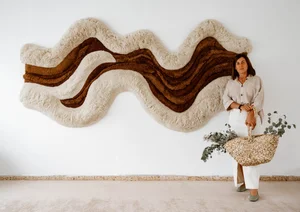
Beyond Decoration: How Monumental Textile Art Transforms Spatial Experience
The evolution from decorative to architectural thinking in textile art represents a fundamental shift in how we understand spatial design. When textile work reaches monumental proportions, it ceases to function as mere wall covering and begins to operate as spatial infrastructure—fundamentally altering how occupants perceive and interact with their environment.
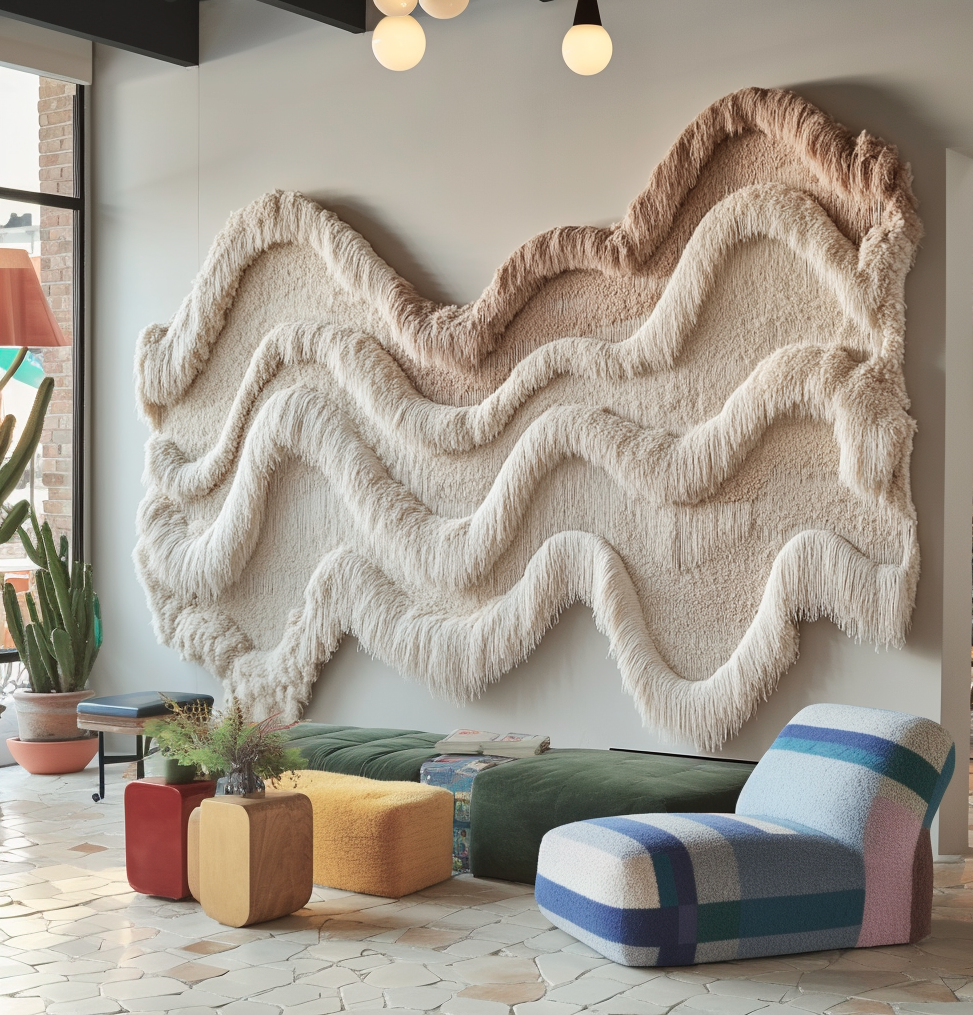
The Psychology of Scale in Sensorial Design
Large-scale textile installations create what we term "gravitational presence"—the psychological pull that draws people toward tactile interaction. Unlike traditional wall art that maintains visual distance, sensorial architecture at this scale invites physical engagement, transforming passive observation into active experience.
Architectural Integration vs. Decorative Application
Traditional interior design often treats textile elements as finishing touches, applied after spatial planning is complete. Sensorial Architecture reverses this hierarchy, positioning textile installation as primary spatial element that influences furniture placement, lighting design, and circulation patterns.

The Hospitality Advantage
Luxury hospitality properties increasingly recognize that guest loyalty stems from memorable experiences rather than just visual appeal. Monumental sensorial installations create the kind of spaces that generate organic social media content and word-of-mouth recommendations—marketing value that extends far beyond the initial investment.
Technical Considerations for Large-Scale Installation
Successful architectural textile installation requires careful consideration of:
Structural load and mounting systems
Acoustic properties and sound absorption
Maintenance accessibility
Creating Spaces That Transcend Photography
In our image-saturated culture, truly exceptional spaces must offer experiences that cannot be fully captured through photography. Sensorial Architecture creates this differentiation by engaging multiple senses simultaneously—the visual richness combines with tactile invitation and even subtle acoustic modification.
The result is spatial character that must be experienced to be understood, creating intrinsic value that drives both property differentiation and guest return rates.