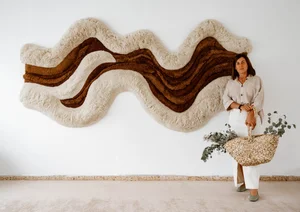
The Fringe Collection: An Exploration in Tactile Territories
The genesis of this collection lies in observing how natural phenomena create boundaries—the way grass moves in wind, how water creates soft edges against stone. These stools emerged as micro-architectures that challenge our understanding of where furniture ends and space begins.


The Language of Soft Architecture
These pieces operate as furniture-objects that negotiate between function and sculpture. The fringe creates what I call "graduated presence"—the impact diminishes gradually rather than stopping abruptly. This soft transition allows the pieces to integrate more naturally into diverse spatial contexts.
Living Systems
What excites me most is how these pieces evolve with use. The fringe develops its own character through interaction—some areas become more compressed, others maintain their original volume. They become archives of human contact, growing more beautiful through engagement.

Experimenting with Proximity
During development, we discovered fascinating behaviors: people interact differently with each piece depending on the fringe density and color combination. The darker fringes suggest protection and create more intimate seating experiences, while lighter ones feel more open and social.
This collection represents our ongoing research into furniture as responsive environment.